France's Valérian Lebrun sits at the top of the overall standings in the inaugural World Tour for Finns Grand Slam Series after the completion of the first four legs, with five events still to come across northern Europe and Italy. The Frenchman's consistency across the circuit - winning the opening leg in Palamos and finishing runner-up in Gdynia - has given him a commanding platform at the midway point of what is proving to be one of the most ambitious new racing circuits in Finn sailing. Bas de Waal of the Netherlands holds second place, with former World No. 1 Laurent Hay of France rounding out the top three.
The WTF Grand Slam 2026 was launched by the International Finn Association as a European-focused, nine-event circuit spanning eight nations between April and October. With the best four results from nine counting toward the final ranking, the series ultimately feeds into the Grand Final at the 2027 Finn Gold Cup in La Rochelle - which gives it genuine long-term stakes beyond the circuit itself. Points are scaled from 100 for a win down to 10 for last place, and with 206 sailors having taken part in at least one of the four events completed so far, the breadth of the series is already notable. Only 16 sailors have competed at more than one event at this stage, a figure that is expected to climb sharply as the circuit moves into northern European waters. For readers who enjoy the thrill of competition in any format, this combination of individual skill and strategic series management - choosing which events to prioritise, knowing when to push and when to protect - carries a tension not entirely unlike the decision-making involved in a slot spribe, where timing and calculated risk define outcomes. slot spribe
The opening leg at Palamos in April set the tone in difficult fashion. No wind on day one threatened to derail the regatta before it had begun, but patient racing management eventually delivered three races on the final day in a steady 15-knot breeze that produced the spectacle the fleet had been waiting for. Lebrun took victory ahead of Hay, with Australia's Paul McKenzie third. The second leg moved to the genuinely spectacular setting of Cannigione on Sardinia for the Italian Championship, where new world champion Alessandro Marega was virtually untouchable, winning seven of the eight races sailed. Bas de Waal claimed the remaining race win and finished second overall, giving him a strong early foothold in the series standings. Marega's dominance was a reminder of just how high the ceiling is in the Finn class when the best are in full flow.
Gdynia Drama and a Title Decided by a Single Point
The third leg, the Open Finn European Championship in Gdynia, Poland, produced the most dramatic racing of the series to date. Light winds and shifting conditions made life unpredictable throughout the week, and the standings remained unsettled all the way to the final race. Current World No. 1 Peter Peet of the Netherlands led going into that decisive race but accumulated too many points to hold on, dropping to third. Lebrun, defending his European title, missed out by a single point - one of the thinnest margins in the sport - with Martijn van Muyden claiming a popular victory to give the Netherlands a second winner of the series from three legs. The competitiveness at the top of the class is clearly intense, and the Gdynia result underlined that no outcome in this series can be assumed.
Brixham Delivers a Domestic Statement
The fourth leg - the Vaikobi British National Championship, held at Brixham Yacht Club from 3 to 5 July - was a markedly different affair. Hot, sunny conditions with light and highly shifty winds rewarded patience and local knowledge above raw boat speed. Matt Howard, a former Olympic campaigner and coach to Giles Scott, was the dominant performer, winning five of the eight races and taking a convincing overall victory. Peter McCoy was the next most consistent sailor in trying conditions, while Lawrence Crispin - defending champion - won the final race to climb to third on the day's leaderboard. With 35 entries, Brixham was the smallest fleet of the four legs so far, and a heavily British podium means the leg's contribution to the overall Grand Slam standings is limited for those chasing the series lead from outside the UK.
What Comes Next - and Why the Series Remains Wide Open
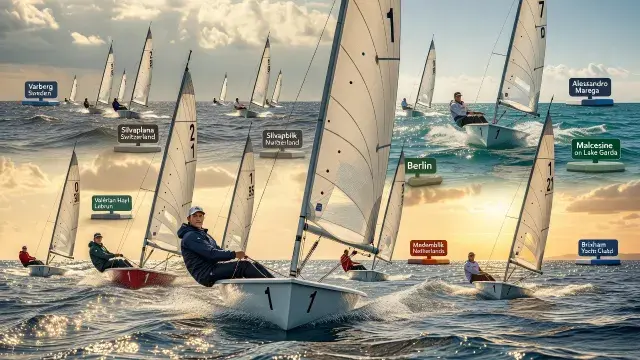
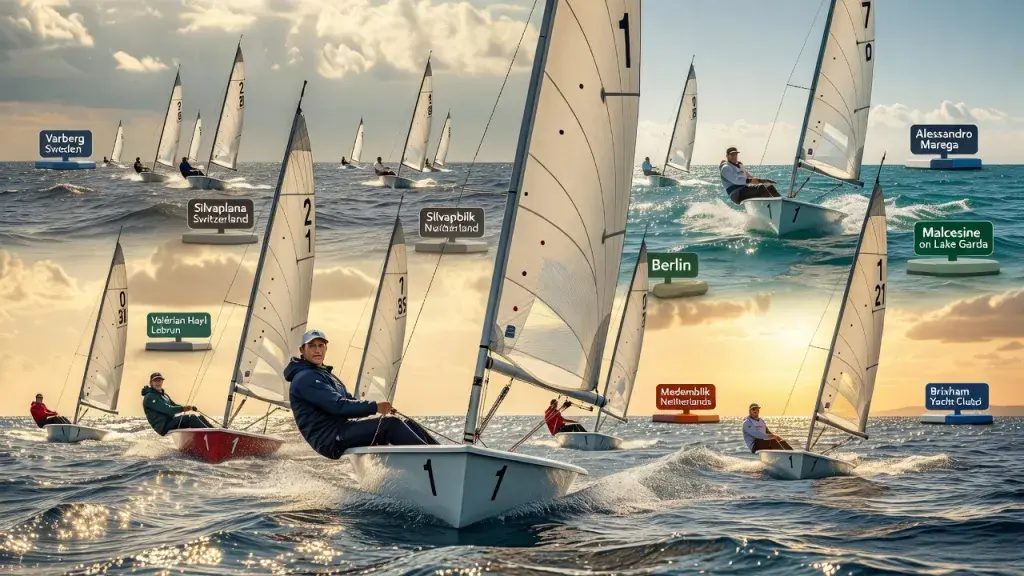
The fifth leg heads to Varberg in Sweden from 21 to 23 August for the combined Swedish and Danish National Championship, marking the series' shift toward Scandinavian waters. After that, the circuit visits the high-altitude lake sailing of Silvaplana in Switzerland, then Berlin, then Medemblik in the Netherlands - where Bas de Waal will expect strong home support - before concluding with the Finn Cup at Malcesine on Lake Garda in October. With the best four results counting and many top contenders yet to complete a second scoring event, the leaderboard remains fluid. Lebrun's early advantage is real, but the structure of the scoring system means that strong performances across the remaining legs could reshape the standings significantly before La Rochelle 2027 comes into view.