Few figures in professional tennis carry the breadth of experience that Thomas Hogstedt brings to the coaching box. From winning the 1981 US Open junior title as a teenager in Sweden's golden generation to guiding Grand Slam champions and World No. 1s across both the ATP and WTA Tours, Hogstedt's career has spanned more than three decades and left a mark on the game that goes well beyond trophies. He is, by any reasonable measure, one of the most respected coaching minds in the sport today.
His journey from competitor to coach was less a calculated pivot than a natural evolution. As his own ranking began to slide in the early 1990s, Hogstedt recognized that a new generation was hitting bigger and moving faster. Retirement from playing came in 1995, but he never truly left the circuit. A coaching course run by the ATP for former players provided a formal foundation, while the close-knit culture of Swedish tennis gave him an immediate environment in which to develop his craft. Much like the crossover appeal of elite athletes who transcend their primary discipline - the way a fighter like gaethje ufc captures attention beyond hardcore fans - Hogstedt built a reputation that extended well beyond the boundaries of Swedish tennis into the wider global game. He moved quickly from junior development into the professional ranks, soon traveling with Magnus Norman during the Swede's breakthrough at Roland Garros, where Norman defeated the reigning World No. 1 and climbed to a career-high ranking of No. 2.
Simultaneously, Hogstedt was mentoring Joachim 'PimPim' Johansson as part of the next wave of Swedish talent, embodying an approach that would define his entire career: developing young players and guiding established professionals at the same time. As Swedish tennis gradually receded from its former dominance following the generation of Robin Söderling and Johansson, Hogstedt's reputation grew internationally. Work with former world No. 4 Nicolas Kiefer and No. 2 Tommy Haas cemented his standing as one of the premier coaches on the men's tour, and that reputation opened the door to an equally distinguished chapter on the WTA Tour Driven by Mercedes-Benz.
Building Champions Through Discipline and a Team-First Culture
The names on Hogstedt's CV read like a roll call of modern tennis royalty. Caroline Wozniacki, Li Na, Maria Sharapova and Madison Keys are among the Grand Slam champions he has worked with, and he is currently coaching France's Diane Parry. What connects these partnerships is not simply the quality of the players, but the shared mentality Hogstedt has always sought.
"I always like players who are ready to work hard," Hogstedt said. "Maria, Li Na and Caroline - they are some of the hardest-working players ever in tennis." That standard was non-negotiable, but it came with an honest admission: not every player-coach relationship works, and Hogstedt has been candid about learning from those mismatches rather than pretending they didn't happen.
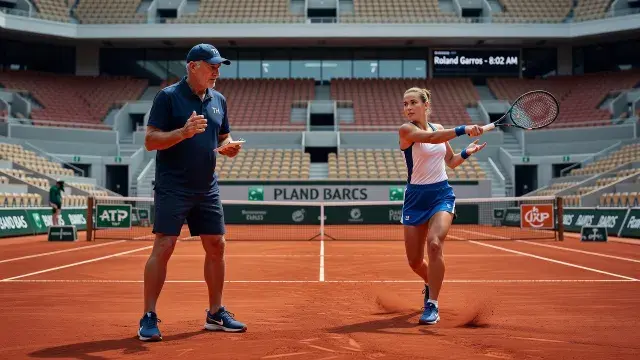
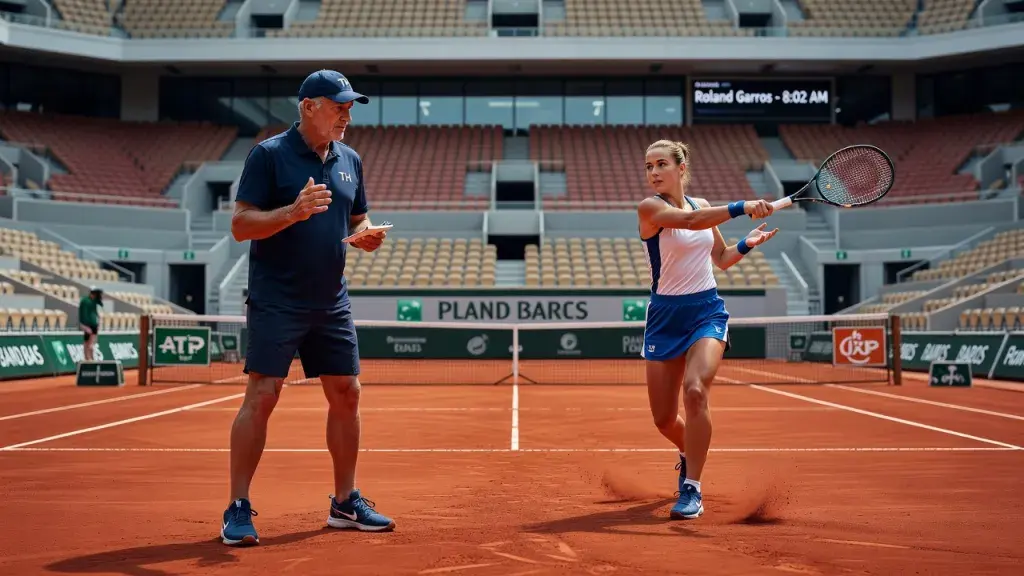
Sharapova, perhaps, best illustrated the philosophy in practice. Following shoulder surgery that threatened to define the remainder of her career, the partnership produced a Roland Garros title that completed her career Grand Slam - a result built not on improvisation but on meticulous daily preparation. Hogstedt encouraged his players to be on court early, often at 8 a.m., before the training queues formed. "You'll be No. 4 on the court," he said of late starters. The early risers, by contrast, had the space and focus to do the work that mattered.
Managing high-profile teams also required emotional intelligence. Working alongside the fathers of both Sharapova and Wozniacki, Hogstedt operated with communication, humility and a deliberate commitment to ensuring one clear voice reached the player. "Sometimes you have to take a step back and work with the team," he said. That team-first culture extended to how his players treated those around them - he recalled Jonas Bjorkman taking "way more care of me than he took care of himself," and described Sharapova's management of sponsors, tournament obligations and her support staff as an education in professional excellence.
Evolving With the Game and Finding Fresh Motivation
Hogstedt has remained relevant across multiple eras partly because he has never stopped adapting. For stretches of his career he simultaneously coached players on both the ATP and WTA tours, believing the cross-pollination of ideas sharpened everyone involved. "Working with a WTA player and an ATP player worked well," he said, "and they learned from each other, especially at the big combined events like Madrid, Rome and the Grand Slams."
Preparation is another pillar of his method. Every practice session is built around the specific demands of the next opponent, with players receiving video analysis before they set foot on court. Training is never generic - it is match-specific, designed to give players both tactical clarity and genuine confidence when it counts.
His current work with Diane Parry has reignited his enthusiasm. Parry's one-handed backhand and what Hogstedt describes as "enormous touch" present a different kind of coaching challenge, and that novelty is precisely what keeps him engaged. "I don't think you get too old for it," he said.
A Legacy Measured in Culture, Not Just Grand Slams
Hogstedt is bullish about the current state of women's tennis. He believes the WTA Tour is in the strongest position it has ever been, defined by depth, professionalism and compelling personalities. He has no doubt that champions of previous generations - Sharapova, Serena Williams, Steffi Graf - would compete at the top today. And he sees clear echoes of the standards he once helped set in the way World No. 1 Aryna Sabalenka carries herself.
"Sabalenka reminds me a lot of Maria," he said. "I think Sabalenka has taken it to another level." It is the kind of observation only someone who has lived through multiple generations of elite tennis can make with real authority.
Ultimately, what Hogstedt has built across 30 years is not simply a record of results. It is a culture - one where coaches, players, fitness trainers, physios and families pull in the same direction with a single voice. Those environments, he has found, tend to become something closer to families. That is the legacy that will outlast the rankings and the Grand Slam tallies, and it is the reason Thomas Hogstedt remains, at this stage of his career, as engaged with the game as he has ever been.