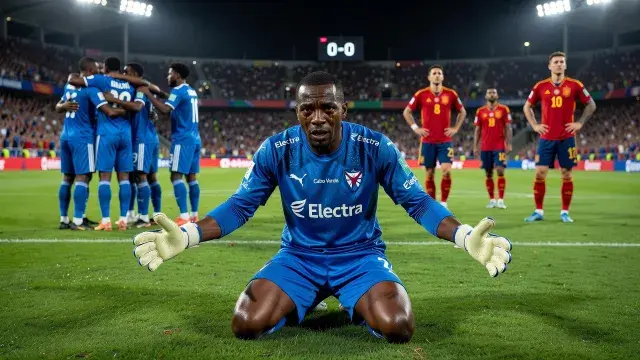
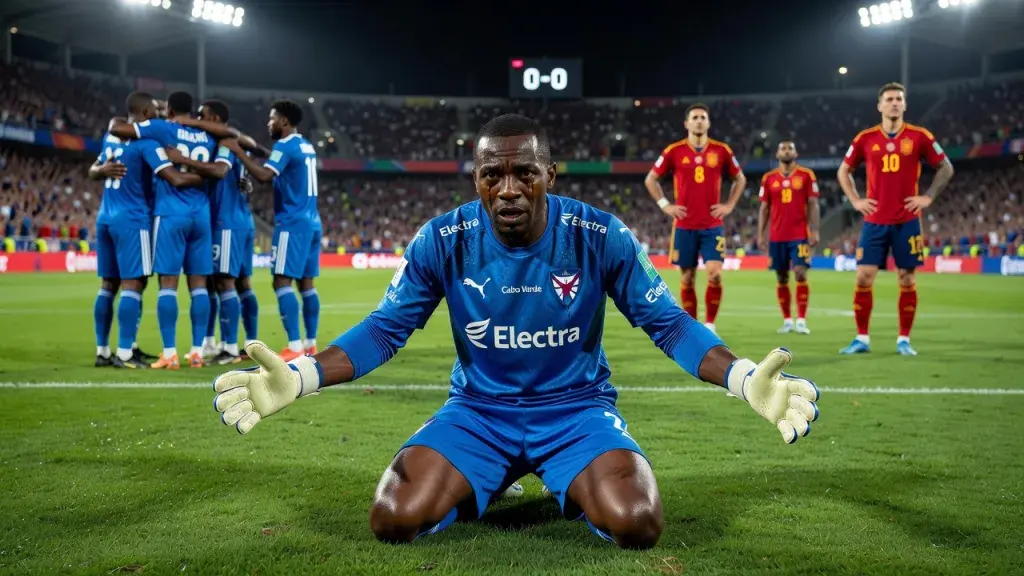
When the final whistle sounded, Cape Verde goalkeeper Vozinha collapsed to his knees in tears, the weight of a 0-0 draw against reigning European champions Spain pressing down on him all at once. At 40 years and 12 days old, born Josimar Dias in Mindelo on the Atlantic archipelago, he had just delivered the performance of his life on the biggest stage in football - and he had done it for a nation of fewer than 600,000 people who had never previously played a single World Cup match.
The raw emotion that flooded the pitch at full-time was about far more than tactics or saves, though there were seven of those, each one greeted with a roar from the stands that matched a goal. It was about a mother who could not afford the visa in time. It was about grandparents who never lived to see this. It was about a man who did not begin his professional career until he was 25, who crossed continents - Portugal, Slovakia, Angola, Moldova, Cyprus - chasing a dream that most people around him had quietly stopped believing in. The contrast with the glittering certainties of elite sport could hardly be sharper; while fans across disciplines spend hours researching everything from match previews to betting on biathlon, Vozinha spent years simply trying to secure a place in a squad. His story is a reminder that the margins between obscurity and history are sometimes heartbreakingly thin.
"I cried because I grew up with my grandparents," Vozinha said after being named player of the match. "Unfortunately, they were not here. They died a few years ago. They were everything for me, everything for my life. And also because of my mum. She didn't manage to be here because of the visa. Because of the money you have to pay for the visa, we didn't manage on time." The words landed with the kind of quiet devastation no press release can manufacture.
A Record Written in Saves and Sacrifice
The statistical backdrop only deepens the significance of the result. By featuring in Cape Verde's debut World Cup fixture, Vozinha became the oldest player to appear in any nation's first-ever World Cup match, surpassing the record set just one day earlier by Curaçao's Eloy Room. Only Egypt's Essam El Hadary was older when making his own World Cup debut. These are not footnotes - they are the kind of markers that define careers, and Vozinha's has been defined entirely by persistence in the face of every structural obstacle that small-island football can place in front of a young player.
"I started playing professional football when I was 25 years old, in 2012," he reflected. "It was too late for a person like me. I thought about leaving the national team, but then I continued because of this dream." He currently plays his club football for Chaves in the Portuguese second division, which underlines just how removed from football's commercial mainstream this story sits. His seven saves against Spain place him in rare company among over-40 goalkeepers at World Cups; the only one to make more in a single match was Northern Ireland's Pat Jennings, who made 10 against Brazil on his 41st birthday in 1986.
Unity as the Foundation of a Historic Night
Vozinha was insistent that the clean sheet belonged to the collective. "Our best weapon is our unity," he said. "Regardless of the player who arrives today, or the player who has been here 10 or 15 years, the way we treat our family is our greatest strength." That framing is not just motivational language - it reflects something structurally important about how smaller African football nations must operate. Cape Verde cannot compete on resources, infrastructure, or depth of talent pool. What they can control is cohesion, and against a Spanish side that has swept through European football, cohesion held for 90 minutes.
"Everyone thought that we came here just to enjoy the World Cup, but no," Vozinha added. "We are here to compete, and we are here to fight for our country." Growing up in Mindelo, he was one of the best young keepers on his island but was repeatedly overlooked because of his height. The path to Portugal was the only realistic escape route, as it has been for generations of Cape Verdean footballers shaped by the country's deep ties to its former colonial power. That migration route, difficult and uncertain as it is, ultimately produced a goalkeeper who stood firm against one of the most technically accomplished attacking units in world football.
From 50,000 Followers to a Global Phenomenon
The world noticed. Vozinha's Instagram following surged from 50,000 to over 1.5 million after CazeTV, the Brazilian YouTube channel holding domestic World Cup rights, encouraged its vast audience to follow him. Brazil's relationship with African football has always carried warmth and genuine curiosity, and CazeTV's reach amplified a story that might otherwise have remained a footnote on the tournament's opening days. "That is crazy," Vozinha told reporters when informed of the numbers. The reaction was entirely in keeping with a man to whom nothing about this moment was taken for granted.
Cape Verde's draw against Spain is already the most significant result in the country's football history. Whether the Blue Sharks can carry that momentum into the rest of the group stage remains to be seen. But what Vozinha produced on this night - the saves, the composure, the tears, the words about his mother and his grandparents - belongs to a category of sporting moment that transcends scorelines. It is the kind of story that the World Cup exists to produce, and it arrived from an archipelago that the tournament's organisers and favourites had written off before a ball was kicked.